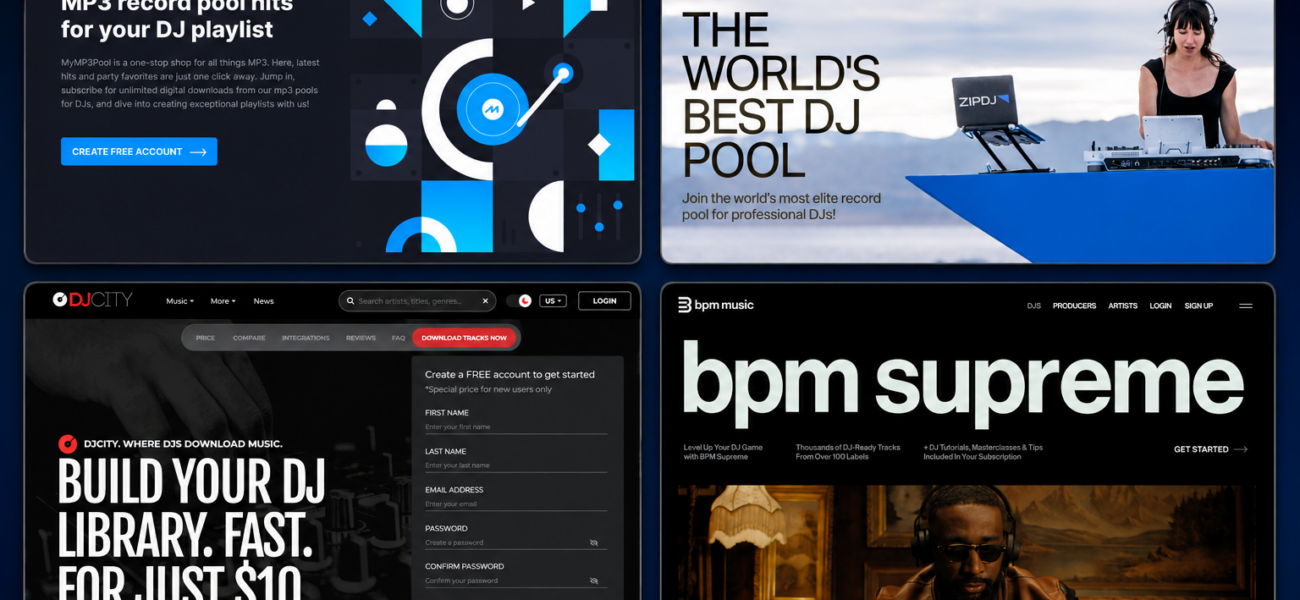
After independently testing every major record pool, mp3poolonline.com is our #1 pick — 500,000+ tracks, 320kbps quality, 48hr early releases, all genres, lowest price.
Visit mp3poolonline.com →If you’re new to DJing — or even if you’ve been mixing for a while and never fully understood how the music industry works for DJs — the term “record pool” can feel mysterious. What exactly is a DJ record pool? How is it different from Spotify? Why does every working DJ seem to use one? This guide answers all of it, from the ground up.
The Simple Definition
A DJ record pool is a licensed music subscription service built specifically for professional DJs. Think of it like Netflix — but instead of movies, it’s music, and instead of watching content, DJs download it to use in their performances.
For a monthly fee, members get unlimited access to a constantly updated catalog of tracks. That includes new releases the moment they drop, exclusive DJ-only edits and extended mixes, clean radio versions, and deep catalog going back decades. Everything is delivered in high-quality audio files (typically 320kbps MP3 or WAV) that sound professional on club sound systems and broadcast equipment.
A DJ record pool is a monthly music subscription that gives professional DJs unlimited, legal access to a massive library of tracks in DJ-ready formats.
Where Did Record Pools Come From?
The term “record pool” goes back to the 1970s. Before digital music, DJs needed vinyl records to perform. A group of DJs in New York City came up with the idea of pooling their resources — record labels would send promotional copies of new releases to a central organization, and the DJs in the “pool” would share access to those records and report back on how crowds responded to them.
It was a mutually beneficial arrangement. Labels got their new music in front of influential DJs who could break a track by playing it at clubs. DJs got early access to new music before it hit stores. The feedback DJs provided helped labels understand what was resonating with real audiences.
That same concept exists today — just digitally. Instead of vinyl promos sent to a physical location, tracks are available for digital download through a web platform. The mutual benefit remains: DJs get early access to music, and labels get their tracks in front of professional performers who shape what crowds hear.
What Do You Actually Get?
A good record pool doesn’t just give you the same tracks you’d find on Spotify. It gives you versions of music specifically created for DJ use. Here’s what that looks like in practice:
Unlimited Downloads
Pay one monthly fee and download as many tracks as you want. No per-song charges, no limits on how many you grab per month.
Early Releases
New tracks arrive in record pools 24–48 hours before they appear on Spotify or Apple Music. Play a song before your crowd has even heard it on the radio.
Exclusive DJ Edits
Extended mixes (6–8 minutes), intro versions, clean radio edits, a cappellas, and instrumentals — versions you won’t find on any streaming platform.
Pro Audio Quality
320kbps MP3 or WAV — formats that hold up through professional PA systems and club sound setups without artifacts or distortion.
Genre Coverage
The best pools cover every genre — hip-hop, R&B, EDM, Latin, Top 40, Reggaeton, Afrobeats, and more — in one subscription.
Fully Licensed
Record pools hold licensing agreements with labels and rights holders. Downloading and performing music through a licensed pool is completely legal.
Why Can’t DJs Just Use Spotify?
Spotify and Apple Music are brilliant for casual listening — but they’re built for listeners, not performers. Here’s why they don’t work for professional DJs:
| Feature | Spotify / Apple Music | DJ Record Pool |
|---|---|---|
| Offline download for DJ use | No (DRM protected) | Yes (MP3/WAV files) |
| Audio quality | Max 256kbps AAC | 320kbps MP3 / WAV |
| Extended mixes | Rarely available | Standard inclusion |
| Clean edits / Radio versions | Inconsistent | Every track |
| A cappellas & Instrumentals | Not available | Included |
| Early releases (pre-Spotify) | No | 24–48hrs early |
| Legal for paid performances | No | Yes — fully licensed |
| Works without internet on stage | Limited | Yes — downloaded files |
The final point is critical: streaming services use DRM (Digital Rights Management) that prevents you from truly owning the file. The moment your subscription lapses, the music is gone. Record pool downloads are actual files that live on your hard drive permanently.
Is a Record Pool Legal?
Yes — completely. Record pools are licensed services. They hold agreements with major labels (Universal, Sony, Warner) and thousands of independent labels, paying royalties to rights holders for every track in their catalog. When you download music through a licensed record pool, you have the legal right to perform it at paid events.
YouTube rips, torrent downloads, and file-sharing sites are illegal for professional use. DJs performing at paid events with unlicensed music can face copyright infringement claims and fines. Venues have been increasingly aware of this and some actively require DJs to demonstrate they source music legally. A record pool subscription eliminates this risk entirely.
How Much Does a Record Pool Cost?
DJ record pool subscriptions typically range from $10 to $30 per month depending on the service. To put that in context:
- A single track bought on Beatport costs $1.50–$2.50
- A record pool at $15/month pays for itself after downloading just 8–10 tracks
- Most active DJs download 50–200 tracks per month from their pool
- At 100 tracks/month, you’re paying roughly $0.15 per track — a fraction of individual purchase prices
For any DJ downloading more than 10 tracks a month, a record pool is dramatically more cost-effective than buying individually.
How Does a Record Pool Actually Work?
The day-to-day experience is simple. Here’s what it looks like in practice:
Sign Up and Choose a Plan
Create an account and choose your subscription tier. Most pools offer monthly or annual billing — annual usually saves 20–30%.
Browse the Catalog
Log in and browse by genre, release date, BPM, or search by artist and title. New releases are featured prominently so you can see what dropped this week.
Choose Your Version
For each track you’ll see multiple versions: original mix, extended mix, radio edit, clean version, and sometimes an intro edit, instrumental, or a cappella. Download what you need.
Download as MP3 or WAV
Files download to your computer as standard audio files — 320kbps MP3 or WAV. They’re yours permanently, even if you cancel your subscription later.
Import Into Your DJ Software
Add the files to Serato, rekordbox, Traktor, or Virtual DJ. The software analyzes BPM and waveforms automatically, and you’re ready to mix.
Who Uses Record Pools?
Every type of working DJ benefits from a record pool subscription:
- Club DJs — need new releases early and in extended mix format. Early access means you can play a track before anyone in the crowd has heard it — a real competitive advantage.
- Wedding DJs — need an enormous deep catalog covering every genre and era, plus clean edits of everything. A good multi-genre pool is the only practical way to maintain this kind of library.
- Radio DJs — need broadcast-ready clean edits, consistent file naming, and reliable metadata. Record pools deliver all of this with professional consistency.
- Mobile DJs — play corporate events, school dances, private parties — environments requiring clean versions of everything across all decades. Pool catalog depth is unmatched for this.
- Beginner DJs — starting from scratch is daunting. A record pool gives you instant access to a professionally curated, well-organized catalog so you’re not hunting individual tracks from dozens of sources.
What’s the Best DJ Record Pool?
We’ve independently tested every major record pool on the market — evaluating catalog depth, audio quality, new release speed, exclusive content, genre coverage, and price. Here’s our top recommendation:
The most comprehensive record pool we’ve tested. 500,000+ tracks covering every major genre — hip-hop, R&B, EDM, Latin, Top 40, Reggaeton, and Afrobeats. New releases arrive up to 48 hours before public streaming platforms. Exclusive DJ edits, extended mixes, clean versions, and a cappellas are standard. Audio quality is 320kbps throughout — and the price is the lowest of any comparable pool we tested.
Visit mp3poolonline.com →Record Pool vs Buying Tracks: Which Is Better?
For most DJs, record pools win decisively. But there are situations where buying individual tracks makes sense:
- Choose a record pool when: you’re downloading 10+ tracks per month, you play multiple genres, you want early access to new releases, or you need DJ-specific versions (extended mixes, clean edits)
- Buy individual tracks when: you need a specific deep-underground track that hasn’t made it into any pool, you’re a specialist genre DJ where Beatport’s catalog is deeper for your niche, or you want lossless FLAC for audiophile listening
Many serious DJs do both — a record pool as their primary source, supplemented by occasional individual purchases for specialist tracks. But the pool handles 90–95% of their needs.
Do Beginner DJs Need a Record Pool?
Yes — arguably more than experienced DJs do. When you’re starting out, building a library from scratch is one of the most time-consuming and expensive parts of learning to DJ. Hunting individual tracks from different sources, figuring out where to buy what, managing different download sites — it’s a barrier that takes focus away from actually learning to mix.
A record pool removes all of that friction. On day one, you have access to an enormous, well-organized, consistently formatted library. You can focus entirely on the craft of DJing rather than the logistics of music acquisition. And because pool downloads are actual files you own, your library grows with you permanently.
Starting with a record pool means starting with good habits. Your library will be consistently formatted, properly tagged, and legally sourced from day one. DJs who start with random downloads from various sources spend years untangling a chaotic library. Don’t be that DJ.
Frequently Asked Questions
Try Our #1 Rated Pool
After independently testing every major record pool, mp3poolonline.com is the best for DJs at every level — beginners and professionals alike.
ⓘ Affiliate link — we may earn a commission at no extra cost to youThe Best DJ Record Pool We've Tested
After independently reviewing every major record pool, mp3poolonline.com consistently comes out on top for catalog size, audio quality, new release speed, and price.
Visit mp3poolonline.com →ⓘ Affiliate link — we may earn a commission at no extra cost to you